Treatment-Resistant Depression Program
beyond trial and error:
a scientific path through treatment resistance
You've tried multiple medications. Followed the protocols. Yet depression persists—holding you back from the life you deserve. You're not broken or hopeless. You may simply need a different approach.
TMS Launching September 2026
When Standard Approaches Need Enhancement
One-third of people with major depression don't achieve remission with initial treatments. Our specialized focus allows us to dig deeper, as true treatment resistance can only be determined after systematically investigating all factors that influence recovery.
Signs You Need a Specialized Approach:
The Arzilence Method
Comprehensive Precision in Complex Cases
Phase 1: Comprehensive Evaluation
A systematic deep dive, including treatment archaeology, pseudo-resistance detection, medical detective work, and psychiatric clarity analysis.
Phase 2: Precision Diagnostics
When indicated, we go deeper with pharmacogenomic (PGx) testing to understand medication metabolism and schema assessment to identify entrenched psychological patterns.
Phase 3: Personalized Treatment
You receive a detailed "Treatment Blueprint" with a clear diagnostic formulation, hierarchical treatment options, measurable milestones, and a care coordination plan.
Advanced Interventions for Confirmed TRD
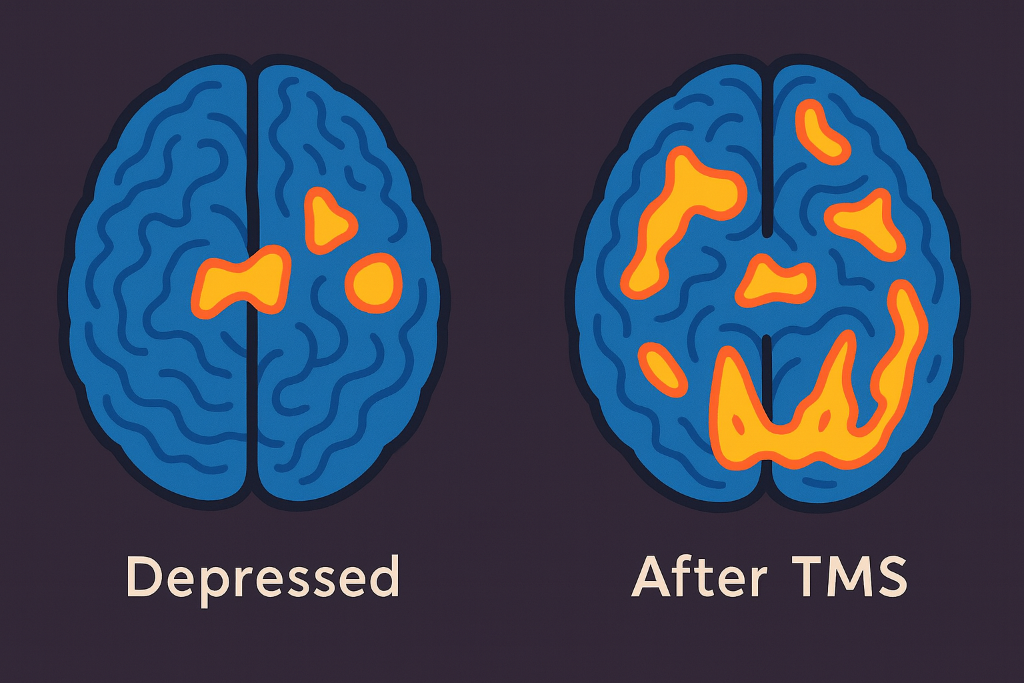
Transcranial Magnetic Stimulation (TMS)
TMS directly modulates the brain circuits disrupted in depression. Targeted magnetic pulses stimulate the left dorsolateral prefrontal cortex, gradually restoring normal activity.
- Response: 50-60% response rate; 30-35% achieve remission.
- Experience: Brief daily sessions (3-20 mins), no anesthesia or systemic side effects.
- Timeline: 4-6 weeks of weekday treatments.
Esketamine/Ketamine Therapy
For severe TRD or when rapid response is critical, we coordinate referrals to vetted ketamine clinics, ensuring seamless care and collaborative monitoring.
Optimized Medication Strategies
Before adding complexity, we ensure current treatments are truly optimized via evidence-based augmentation, strategic class switches, and precision dosing informed by PGx results.
Your Path Through the Program
Week 1-2
Comprehensive Evaluation
90-minute initial assessment, structured treatment history review, and medical/psychiatric screening.
Week 2-3
Precision Testing
When indicated, includes laboratory workup, pharmacogenomic analysis, and schema assessment.
Week 3-4
Treatment Blueprint Delivery
Collaborative review of findings, personalized treatment architecture, and clear next steps.
Week Ongoing
Implementation & Optimization
Regular progress monitoring, data-driven adjustments, and continuous care coordination.
Essential Questions, Clear Answers
For Referring Providers
We are a specialized resource for your most challenging cases, providing time-intensive evaluation, interventional treatments, and ongoing collaboration. Many patients return to their primary psychiatrist for maintenance care after achieving remission.
Ready to Move Beyond Resistance?
You've shown remarkable resilience. Now, let's match it with precision care.